

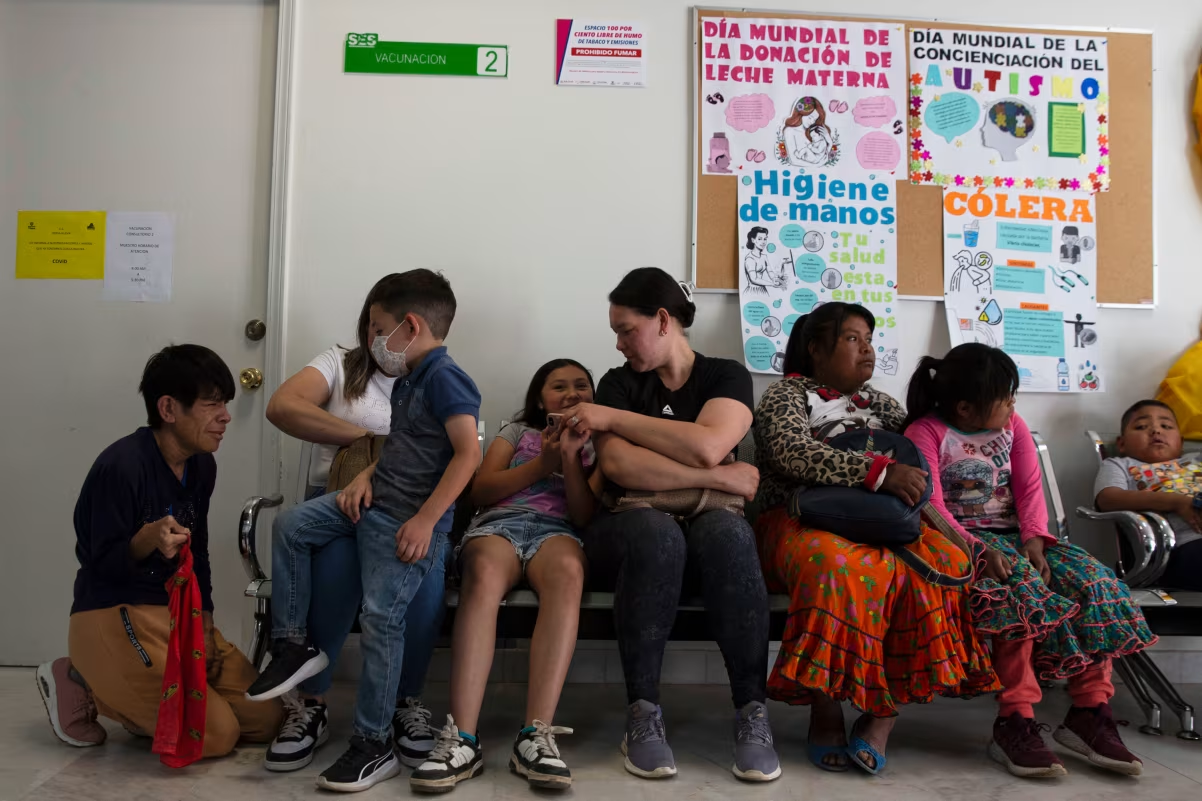
A growing measles outbreak moving between Mexico and Texas is exposing fragile vaccination coverage and showing how easily a disease once considered controlled can regain ground when immunity quietly slips.
The warning signs did not arrive all at once. At first, health workers noticed scattered cases appearing in clinics near the border. A child here, a family cluster there. Then numbers began rising on both sides of the Mexico–United States frontier, and what looked isolated started to resemble something more coordinated and harder to contain.
Measles, a disease many believed belonged to an earlier public health era, is now spreading through communities connected by constant movement between northern Mexico and Texas. Families cross daily for work, school, medical visits and trade, creating a reality where infectious diseases travel as easily as people do.
Health authorities say the outbreak reflects a deeper vulnerability rather than a sudden failure. Vaccination coverage declined in several areas during and after the COVID 19 pandemic, when routine immunization programs were interrupted and healthcare systems focused on emergency response. Those missed vaccinations left quiet immunity gaps that are only becoming visible now.
Measles moves fast once those gaps exist. The virus spreads through the air and can linger in enclosed spaces long after an infected person has left. Doctors describe it as one of the most contagious diseases known, capable of infecting nearly everyone without protection who comes into contact with it.
Many of the recent infections involve children who never received routine vaccines or adults uncertain about their immunization history. Public health workers have begun expanding vaccination campaigns, setting up temporary clinics and urging families to review medical records. Officials on both sides of the border are coordinating surveillance and sharing data, aware that containment requires cooperation rather than separate national responses.
The outbreak has also reopened an uncomfortable conversation about vaccine hesitancy. Some communities remain skeptical of immunizations, while others simply face access barriers linked to poverty, migration status or overstretched healthcare systems. In practice, those factors often overlap, creating pockets where the virus finds room to spread.
Hospitals in affected areas are monitoring for complications. While measles is sometimes remembered as a routine childhood illness, doctors stress that it can lead to pneumonia, brain inflammation and, in severe cases, death. Younger children and people with weakened immune systems face the highest risk.
What makes this moment unsettling for health experts is not only the number of cases but the symbolism. The Americas had previously achieved major progress in reducing measles transmission, and outbreaks of this scale challenge the assumption that elimination automatically means permanence.
Officials are careful not to frame the situation as panic. Vaccines remain highly effective, and response systems are already active. Yet epidemiologists warn that the resurgence illustrates how fragile public health victories can be. Diseases rarely disappear completely; they wait for opportunity.
Along the border, daily life continues. Markets open, buses cross checkpoints, families move back and forth as they always have. But behind that routine activity, health teams are working quietly to rebuild a shield that once seemed secure.
For now, the outbreak stands as a reminder that global health progress often moves in cycles. Control is possible, even likely, but only if attention holds long enough to close the gaps that allowed measles to return in the first place.

Promise Idoko is Junior Reporter working with moderncrux He covers global politics and international affairs. Based in Nigeria,


