

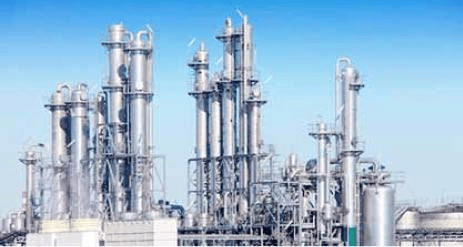
The government admits three state oil refineries are not working despite spending over $1.5 billion on repair works.
Federal Government officially admits that the three major government owned oil refineries located in Port Harcourt, Warri, and Kaduna are still not working at all.
This painful confession comes after the state-owned oil company spent over $1.5 billion of public money to fix and repair these facilities so that Nigeria could refine its own crude oil locally.
Instead of producing petrol, diesel, and kerosene for citizens, the huge factories in Rivers State, Delta State, and Kaduna State remain quiet and idle, forcing the country to continue relying heavily on imported fuel and private refineries.
This news has shocked many citizens, as government officials repeatedly promised the public that the refineries would start working after receiving massive cash loans and repair budgets.
A huge sum of $1.5 billion was specifically taken to fix the Port Harcourt refinery alone, while additional hundreds of millions of dollars were approved for the Warri and Kaduna plants.
However, despite all this public money given to contractors and management teams, the machines have failed to produce fuel.
Top officials in the oil sector now admit that the government made serious mistakes by focusing only on giving out big repair contracts without building the technical ability needed to manage and run complex oil factories for many years.
Confirming this failure, senior leadership at the Nigerian National Petroleum Company Limited spoke about how the government wasted huge money trying to repair old oil machines without getting any positive result for the country.
Admitting that the state owned oil facilities were simply draining public money without working, official leadership at NNPC stated that “continuing to operate the facilities was destroying value and draining public resources”.
Explaining why all the big money spent on repairs did not make the refineries produce fuel for Nigerians, top management explained that “to make a refinery work, you need three things: financing, a competent contractor, and world-class operational capacity. Unfortunately, we focused on the first two and ignored the third”.
Describing how the old system allowed people to take public money without delivering any working factory, officials confessed that “the system was designed for everyone to take from it, not to put anything into it”.
Civil society groups and opposition leaders are demanding a full police and anti-graft investigation. Community groups in the Niger Delta region are demanding to know where the $1.5 billion went, noting that crude oil from their lands was used as security to collect loans that produced no working refinery.
Lawmakers and public analysts say those who collected money to fix the refineries must be arrested and forced to return public funds.

Jennifer Baba is a journalist, international news correspondent, and writer at Moderncrux, where she covers artificial intelligence, fintech, emerging technologies, global politics, and international affairs. Based in Nigeria, she is passionate about transforming complex global developments into clear, engaging stories that inform and inspire readers.


