

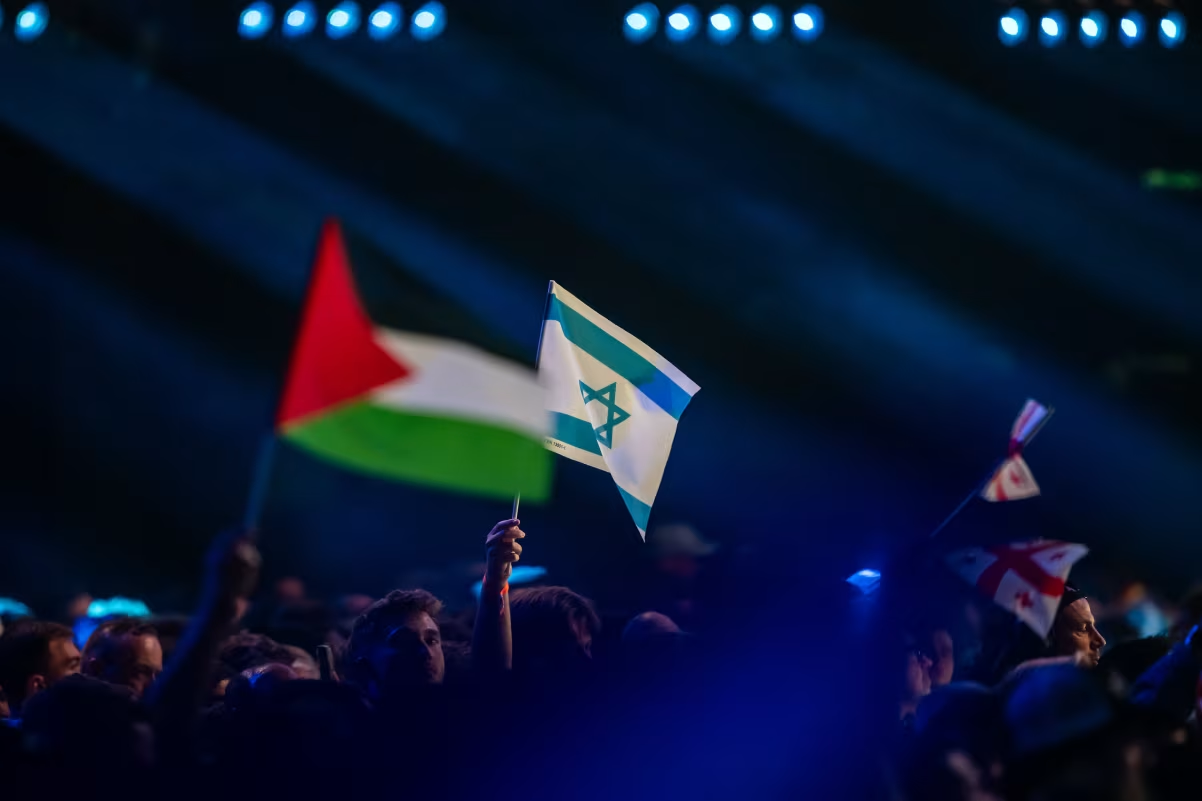
Christian Bruna/Getty Images
Europe’s most watched music competition is once again caught between entertainment and geopolitics.
The 2026 Eurovision Song Contest, hosted this year in Vienna, has entered its final stretch but instead of focusing purely on music, the competition has become a flashpoint for political division across the continent following controversy surrounding Israel’s participation.
Organisers confirmed that Israel would be allowed to compete after the European Broadcasting Union (EBU) approved its entry following required lyric adjustments during the contest’s review process. Yet that decision has triggered an escalating backlash from broadcasters, artists, and activists who argue the competition cannot remain politically neutral amid ongoing global tensions linked to the Gaza conflict.
Several European broadcasters had earlier warned they could withdraw if Israel remained in the lineup. Spain, Ireland, Slovenia, Iceland and the Netherlands were among those publicly considering or supporting boycott actions, illustrating how deeply divided the Eurovision community has become.
Despite the controversy, Israel advanced through the semi-finals and secured a place in the grand final a development that intensified demonstrations both inside and outside the arena. During one performance, security personnel removed a pro Palestinian protester from the audience as chants and demonstrations briefly disrupted proceedings.
For Eurovision organisers, the moment represents a delicate balancing act. The contest has long promoted itself as an apolitical celebration of culture and unity, yet critics argue that neutrality becomes difficult when global conflicts spill into cultural spaces.
More than 1,000 musicians and public figures reportedly signed open letters urging broadcasters to boycott the event, accusing organisers of applying inconsistent standards compared with previous geopolitical controversies involving other nations.
The EBU has repeatedly defended its stance, insisting Eurovision remains a competition between broadcasters rather than governments. Officials argue that excluding participants based on political disputes risks undermining the event’s foundational principle of inclusivity.
Still, the debate has reshaped the atmosphere surrounding the contest. Instead of the traditional focus on spectacle, staging and songwriting, conversations across European media have centered on ethics, cultural diplomacy and whether entertainment events can truly exist outside politics.
Historically, Eurovision has faced controversy before from voting disputes to flag protests but observers say the scale of political mobilisation around the 2026 edition feels different. Broadcasters were even given extended deadlines to decide participation while consultations took place over Israel’s eligibility, highlighting the seriousness of the dispute behind the scenes.
Fans arriving in Vienna describe a divided mood: celebration inside concert halls, tension outside them. Social media campaigns supporting both participation and boycott have surged, turning Eurovision into a broader symbolic battleground rather than merely a music competition.
As the grand final approaches, organisers hope performances will reclaim attention from politics. Yet the controversy has already reshaped this year’s narrative.
Whether remembered for its music or its moment in global cultural debate may ultimately depend less on who wins the trophy and more on how Europe reconciles entertainment with an increasingly polarized world stage.

Promise Idoko is Junior Reporter working with moderncrux He covers global politics and international affairs. Based in Nigeria,


