

Andrew Harnik/Getty Images
WASHINGTON The battle over control of the United States’ most powerful economic institution intensified this week as President Donald Trump’s nominee to lead the Federal Reserve, Kevin Warsh, advanced toward Senate confirmation, setting off fresh debate over central bank independence and the future direction of U.S. monetary policy.
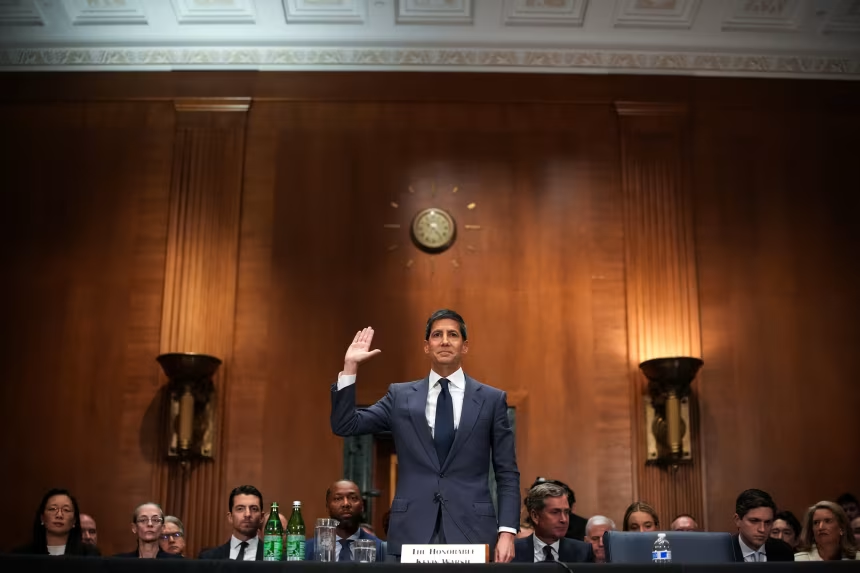
Warsh, a former Federal Reserve governor who served during the global financial crisis, appeared before lawmakers amid growing scrutiny surrounding investigations tied to outgoing Fed Chair Jerome Powell and broader concerns about political influence over interest rate decisions.
The nomination represents one of the most consequential economic appointments of Trump’s current administration, arriving at a time when inflation pressures, global market volatility and geopolitical tensions continue to weigh heavily on the world economy.
A Contested Nomination
During Senate discussions, lawmakers questioned whether Warsh would maintain the Federal Reserve’s long-standing independence from political pressure a principle widely viewed as essential for maintaining investor confidence.
Republican and Democratic senators alike pressed the nominee on how he would handle disagreements with the White House, particularly on interest rates and economic stimulus policies.
Warsh emphasized that the Fed’s mandate remains rooted in economic stability rather than politics.
“The Federal Reserve must act based on data, not political considerations,” he told lawmakers during testimony, according to congressional proceedings cited in coverage of the hearing.
Still, skepticism persists among several senators who argue that Trump’s repeated criticism of past Federal Reserve leadership raises concerns about future interference.
Why the Fed Chair Matters Now
The Federal Reserve chair plays a decisive role in setting borrowing costs, controlling inflation and guiding economic expectations globally. Any shift in leadership can immediately influence markets, currencies and investor sentiment far beyond U.S. borders.
Economists note that Warsh is considered more skeptical of aggressive monetary stimulus compared with some previous Fed leaders a stance that could signal tighter financial conditions if confirmed.
Financial analysts say markets are watching closely for signals about interest rate policy, especially as global growth forecasts remain uncertain and energy prices fluctuate amid ongoing geopolitical conflicts.
Political Stakes Rising
Trump’s decision to nominate Warsh also reflects broader political priorities heading into a volatile election environment. Allies view the choice as an effort to reshape economic policymaking, while critics warn it risks blurring the boundary between political leadership and central banking.
The confirmation process now moves deeper into Senate negotiations, where even small shifts in support could determine the outcome.
If approved, Warsh would replace Powell at a moment when policymakers are balancing slowing growth concerns with the need to prevent inflation from resurging.
Global Impact Ahead
Because the Federal Reserve effectively sets the tone for global finance, the leadership change could ripple across emerging markets, international trade systems and currency stability worldwide.
Investors, central banks and governments are expected to monitor the confirmation closely in the coming weeks, aware that the decision could redefine U.S. economic strategy for years to come.
For now, Washington remains locked in a familiar standoff one where economics, politics and global stability intersect inside the halls of Congress.

Promise Idoko is Junior Reporter working with moderncrux He covers global politics and international affairs. Based in Nigeria,


