

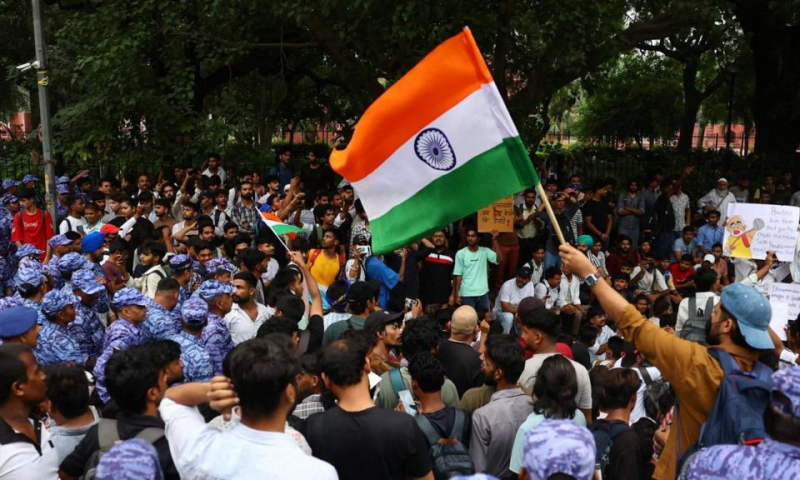
Massive youth-led ‘Cockroach’ protests in New Delhi demand the resignation of India’s education minister over exam leaks and rising unemployment.
A massive wave of youth-led political unrest has swept through India’s capital as tens of thousands of young demonstrators clash with riot police in one of the most unexpected challenges to Prime Minister Narendra Modi’s government in recent years. What initially began as an online satirical movement has swiftly transformed into a formidable street mobilization that is capturing international headlines and putting intense pressure on federal authorities. The spiraling unrest highlights deep-seated frustration among the country’s younger generation over systemic corruption, severe unemployment, and a failing national examination infrastructure.
Examining what has taken place, tens of thousands of young demonstrators organized by the Cockroach Janta Party (CJP) flooded the streets to attempt a high-profile march toward the national Parliament building. Tensions boiled over when security forces set up heavy barricades, deployed tear gas canisters, and launched baton charges to prevent the crowds from advancing. Local authorities confirmed that more than 60 demonstrators and over 100 police officers suffered injuries during the chaotic clashes, while emergency internet suspensions were briefly imposed in surrounding neighborhoods to suppress further gathering calls. Despite the violent police response, hundreds of resilient protesters refused to disperse, camping out overnight and pledging to maintain a permanent sit-in until the government meets their primary demand: the immediate resignation of Education Minister Dharmendra Pradhan.
The core of the confrontation unfolded in central New Delhi, specifically concentrated around the historical protest site of Jantar Mantar and the heavily guarded avenues surrounding India’s Parliament House. While the physical clashes occurred in the nation’s capital, the political shockwaves are reverberating across urban centers and rural villages throughout the country, drawing support from national opposition figures, civil rights organizations, and millions of social media users worldwide. The dramatic street march and subsequent police crackdown erupted on Monday, July 20, 2026, with widespread sit-ins and secondary protests continuing into Tuesday, July 21, 2026. The confrontation follows more than two months of escalating digital campaigning and localized demonstrations that began earlier in the summer.
See Also: Rebel Wilson Cleared in High-Stakes Defamation Lawsuit Brought by Co-Star
Understanding why this movement has erupted requires looking at a toxic mix of educational scandals and economic anxieties affecting over 600 million young Indians. The tipping point arrived in May after authorities canceled the prestigious NEET medical entrance exam due to widespread paper leaks, disrupting the aspirations of more than two million students competing for scarce university slots. The satirical name “Cockroach Janta Party” was adopted after disparaging public remarks compared unemployed youth to pests; in response, 30-year-old founder Abhijeet Dipke reclaimed the insect as a symbol of ultimate survival and resilience against an unyielding system. Further galvanized by a 21-day hunger strike led by prominent education activist Sonam Wangchuk, the movement has grown into a powerful outlet for a generation demanding basic economic opportunity, administrative transparency, and democratic accountability.

Jennifer Baba is a journalist, international news correspondent, and writer at Moderncrux, where she covers artificial intelligence, fintech, emerging technologies, global politics, and international affairs. Based in Nigeria, she is passionate about transforming complex global developments into clear, engaging stories that inform and inspire readers.


